Whether you’re exploring your options or ready to schedule a consultation, we’re here to help you take the next step toward a pain-free life.


Cervical myelopathy is a serious form of compressive myelopathy where cervical cord compression impairs the transmission of nerve signals to and from your arms, chest, legs, pelvis, and abdomen. Unlike radiculopathy, which affects individual nerve roots, myelopathy involves compression of the spinal cord itself, causing symptoms in multiple body areas simultaneously. The most common cause is degenerative changes due to arthritis, leading to cervical stenosis, where the spinal canal becomes too narrow and compresses the spinal cord. Other causes include herniated discs, tumors, trauma, viruses, or autoimmune diseases. Prompt diagnosis and cervical myelopathy treatment are critical, as delayed treatment can allow the condition to progress and potentially cause permanent spinal cord injury, paralysis, or loss of bowel and bladder function. At Wascher Cervical Spine Institute in Appleton, WI, Dr. Thomas Wascher has achieved a 99% improvement rate, treating over 252+ cases.
Anything that damages or impinges on the cervical portion of the spinal cord can lead to cervical myelopathy. Some possible causes include tumors, trauma, viruses, herniated discs, or autoimmune diseases. However, the most common cause is degenerative change due to arthritis, called degenerative cervical myelopathy or cervical spondylotic myelopathy.
Degenerative changes that occur with conditions such as arthritis can affect the ligaments, discs, and joints in the spine. These changes put pressure on the spinal cord by compressing it or causing the cord to become narrowed. This narrowing of the cervical spinal cord is called cervical stenosis. When the cervical spine becomes too tight, it compresses the spinal cord, leading to the symptoms of myelopathy.

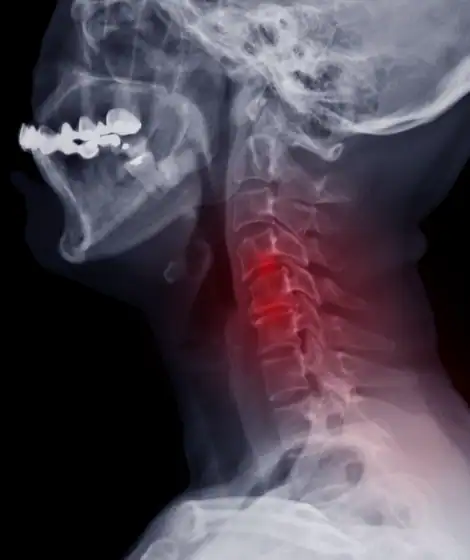
Common Symptoms: When the spinal cord is compressed, a variety of myelopathic symptoms may result, including:
Some people experience neck, shoulder, or arm pain. A shock-like sensation when flexing the neck or putting the chin on the chest is called Lhermitte's phenomenon.
Prompt treatment is critical, as untreated cervical myelopathy can progress to permanent spinal cord injury, paralysis, or loss of bowel and bladder function.
Diagnostic Process: A clinical exam combined with MRI or CT scans of the cervical spine can reveal spinal cord compression. Somatosensory evoked potential (SSEP) studies may also be used to measure nerve signal transmission through the spinal cord.
Most people with cervical myelopathy require cervical myelopathy surgery to prevent progression and to reduce the risk of permanent spinal cord damage. Surgery for myelopathy involves decompressing the spinal cord in order to relieve pressure and allow the nerves to function normally again.
Common surgical approaches include anterior cervical corpectomy, anterior cervical decompression, or posterior cervical decompression and fusion. Intraoperative neuromonitoring is often used during surgery to monitor spinal cord function and ensure patient safety.
As with any surgery, there are risks, but surgical decompression offers satisfactory results in over 95% of cases.
Vanessa had years of neck pain leaving her unable to even do her daily work. But with Dr. Wascher’s quick and timely intervention that included multiple viewings of MRIs, muscle and nerve tests, followed by a 3-Level Anterior Cervical Fusion, she is now happy without any neck issues. “I can happily say that by following the recommendations of Dr. Wascher, I am now pain-free,” says Vanessa as she talks about how great Dr. Wascher and his team were to work with.
When Nanette experienced deep pain in her shoulder, she got tests performed, only to discover that she, in fact, had issues with her neck instead. After a few MRIs and scans, she contacted Dr. Wascher, who told her that she has bone spurs going into the spinal cord. Within a span of 3 weeks, she was able to go through surgery and get on the road to recovery. “I cannot say enough about Dr. Wascher’s expertise and empathy”, says Nanette as she joins an ever-growing community of people who, through Dr. Wascher and his team, have found happiness again.
Dr. Thomas Wascher brings over 30 years of specialized cervical spine expertise to the treatment of cervical myelopathy. He has performed over 4,500 cervical spine surgeries during his career, with over 252 anterior-posterior cases achieving a 99% improvement rate. Dr. Wascher's microscopic surgical techniques result in smaller scars, less pain, and faster recovery.
The practice offers free MRI reviews and second opinions at 5320 W. Michaels Dr., Appleton. Dr. Wascher graduated valedictorian from high school, college, and medical school, and has been recognized in America's Top Surgeons since 2007. His philosophy of treating everyone as a family member with a unique approach ensures personalized care rather than one-size-fits-all treatment.




Cervical myelopathy involves compression of the spinal cord itself, causing symptoms in multiple body areas including both arms and legs, balance problems, and difficulty walking. Cervical radiculopathy involves compression of individual nerve roots, typically causing pain, numbness, or weakness in one arm. Myelopathy is generally more serious and requires prompt surgical intervention to prevent permanent spinal cord damage.
While cervical myelopathy treatment cannot reverse existing spinal cord damage, surgical decompression can halt progression and prevent further deterioration. Over 95% of patients experience satisfactory results from surgery. The goal is to relieve pressure on the spinal cord, stabilize symptoms, and prevent permanent neurological damage. Early intervention provides the best outcomes.
Untreated cervical myelopathy typically progresses over time, leading to worsening symptoms and potentially permanent spinal cord injury. This can result in paralysis, loss of bowel and bladder function, severe weakness, and significant disability. Because the condition usually worsens without treatment, surgery is recommended for most patients to prevent irreversible damage.
While all surgery carries some risk, modern cervical myelopathy surgery is generally safe with a high success rate. Dr. Wascher uses intraoperative neuromonitoring to continuously monitor spinal cord function during surgery, significantly reducing risk. Over 95% of patients achieve satisfactory results, and the risks of leaving myelopathy untreated typically far outweigh surgical risks.
Physical therapy alone cannot correct spinal cord compression and is generally not recommended as primary treatment for cervical myelopathy. Unlike other neck conditions that may respond to conservative care, myelopathy involves direct spinal cord compression that will likely progress without surgical intervention. Surgery to decompress the spinal cord is the standard treatment.